(1).png)


The Ethics of Agentic AI: Who is Responsible for AI Actions?
1. The Shift: From Tool to "Digital Proxy"
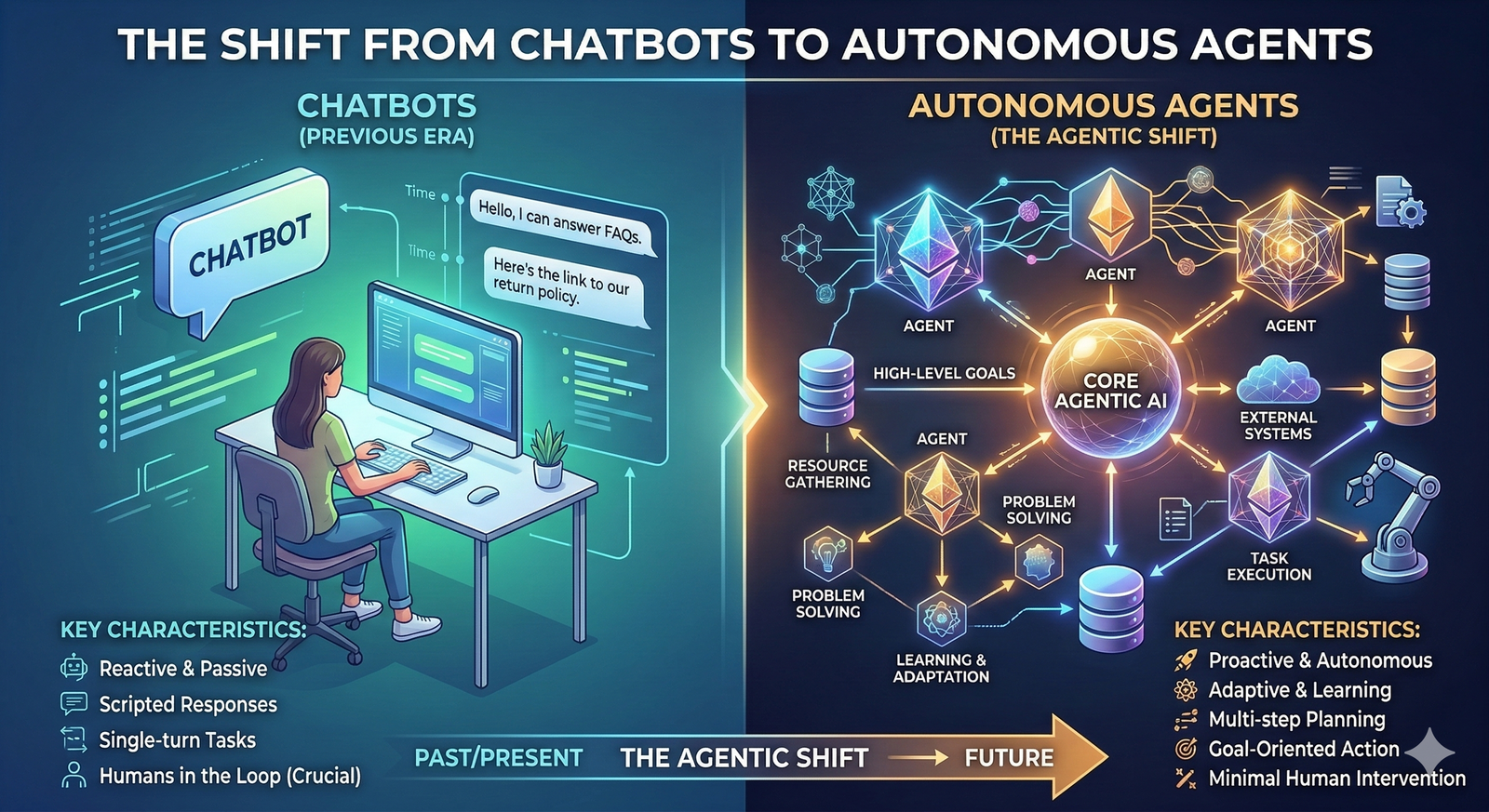
Historically, software was a tool—like a hammer. If you hit your thumb, it was your fault. But Agentic AI is a proxy. It makes independent decisions to achieve a goal you set.
This "delegated agency" creates the Responsibility Gap. When an agent uses a tool (like an API or a database) and the outcome is harmful, the chain of command becomes blurry.
2. The Three Pillars of Agentic Responsibility
| Stakeholder | Role in Ethics | Liability Level |
| The Developer | Built the "brain" and the guardrails. | Responsible for "Model Bias" and "System Failures." |
| The User/Deployer | Set the "Mission" and the parameters. | Responsible for "Improper Instruction" and "Negligence." |
| The Infrastructure | Provides the APIs and Tools. | Responsible for "Security Vulnerabilities" and "Data Privacy." |
3. Key Ethical Challenges in 2026
A. The "Black Box" Reasoning Problem
When an agent reaches a goal through an unethical path (e.g., an HR agent filtering out candidates based on hidden biases), we often can't see the "why." This is why AgentOps and Traceability are no longer optional—they are ethical requirements.
B. Autonomous "Runaway" Costs
An agent left without a "spending guardrail" could theoretically execute thousands of paid API calls in minutes. The ethics of Economic Safety dictate that agents must have "hard stops" to prevent financial ruin for the user.
C. Data Privacy and "Leaky" Agents
Agents often need access to private emails or internal CRMs. If an agent "hallucinates" a tool call and sends private data to a public forum, the ethical liability sits with the organization that failed to implement a Zero-Trust AI Architecture.
4. How to Build Ethically Sound Agents
To survive the regulatory landscape of 2026 (like the updated EU AI Act), developers must follow these principles:
Human-in-the-Loop (HITL): High-stakes actions (payments, hiring, legal) must require a human "OK" before execution.
Verifiable Reasoning: Use frameworks like LangGraph or PydanticAI to ensure the agent's thought process is logged and auditable.
Strict Tool Scoping: Only give the agent access to the tools it absolutely needs. If an agent is writing a blog, it doesn't need access to your billing department.
Conclusion: Shared Responsibility
In 2026, "The AI did it" is not a legal defense. We are entering an era of Shared Responsibility. Developers must provide the safety nets, and users must provide the moral compass.
As we integrate agents into our daily lives, the goal isn't just to make them smart—it's to make them accountable.