(1).png)


1. The 2026 AGI Timeline: What the Leaders Say
The "AGI by 2026" predictions made by Elon Musk and others in 2024 are being put to the test. The consensus among the "Big Three" has shifted toward a "Gentle Singularity."
OpenAI (Sam Altman): Now frames AGI as a matter of "sustained execution" rather than new science. Altman’s recent "The Gentle Singularity" essay suggests that while full AGI might be a 2027–2028 milestone, 2026 is the year of "Novel Insights"—where AI begins to propose scientific hypotheses humans haven't thought of.
Anthropic (Dario Amodei): Maintains that machines matching a "country of geniuses" could arrive by late 2026 or 2027, provided the scaling of compute power doesn't hit a "Physics Wall."
Google DeepMind (Demis Hassabis): Remains the most cautious, sticking to a 5-to-10-year window, citing the "Jagged Intelligence" problem—where AI can pass the Bar Exam but still struggles with common-sense physical tasks.
2. The 2026 Breakthroughs: Why It Feels Closer
Several key technological "moats" were crossed in the last 14 months, bringing us to the doorstep of AGI.
A. From Chatbots to "Agentic" Systems
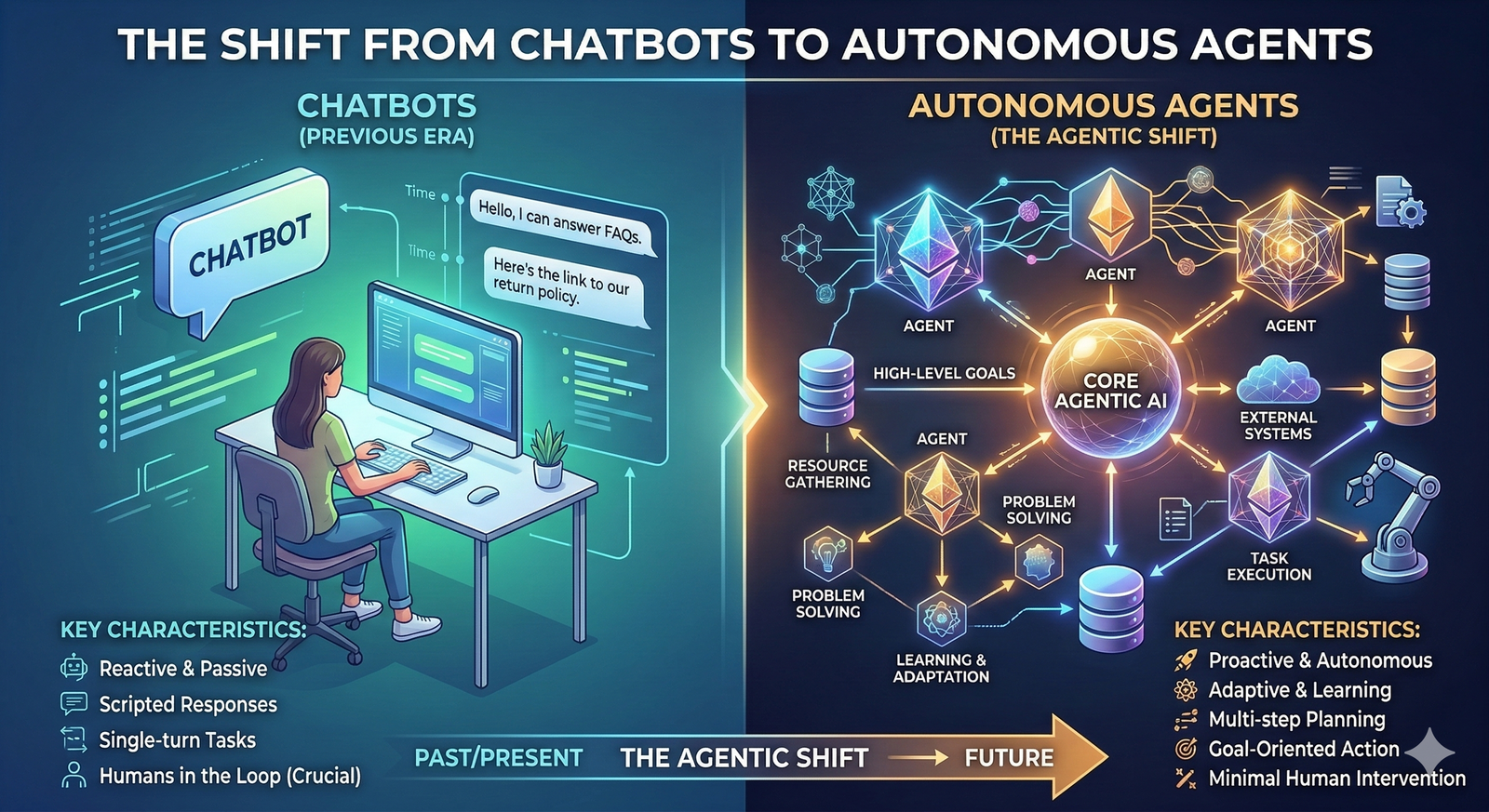
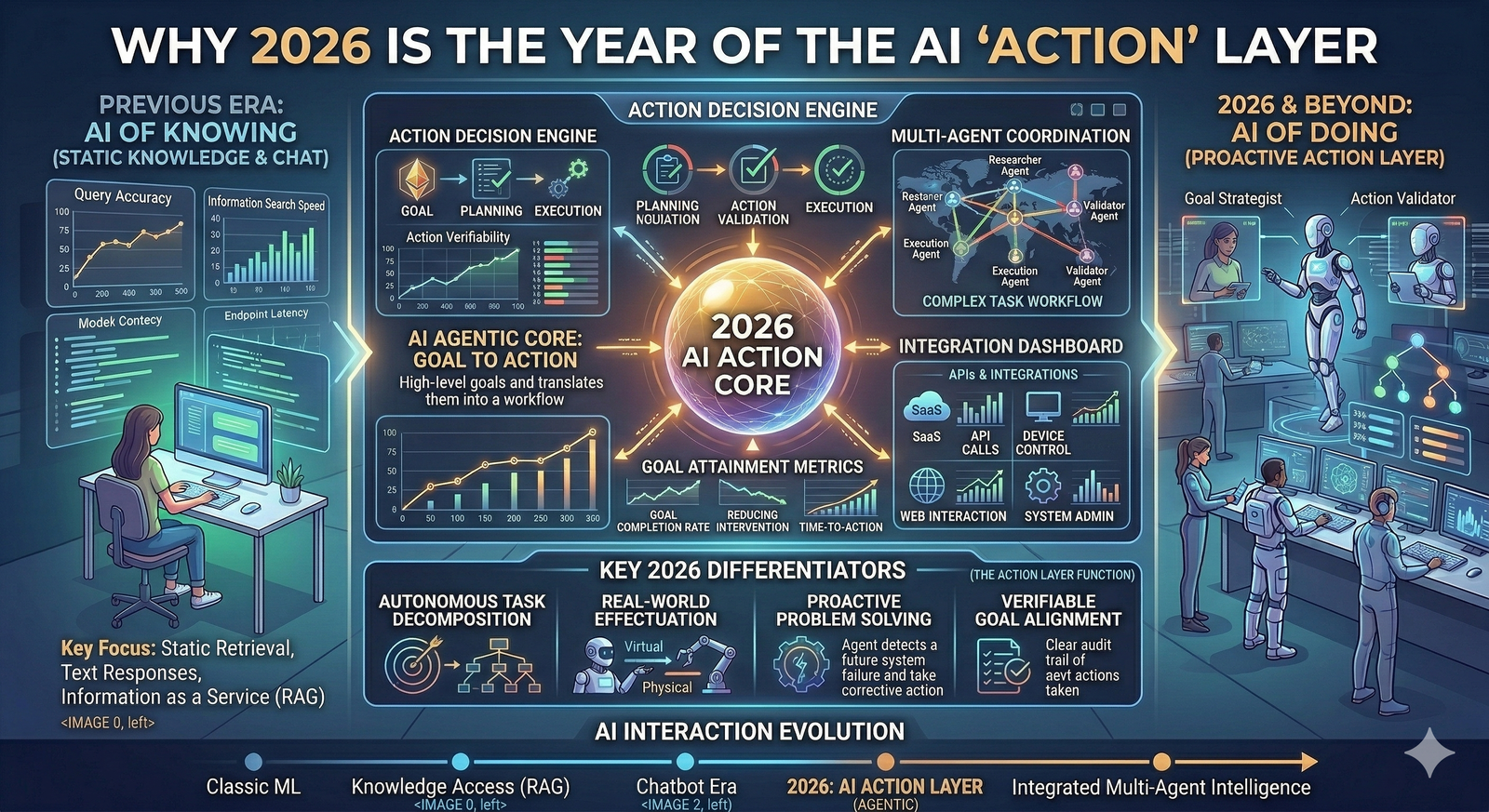
In 2026, we have moved past the "Chat" interface. Modern AI is Agentic, meaning it can plan, reason, and execute multi-step goals autonomously over days or weeks. It doesn't just write code; it manages the entire software lifecycle, from requirements to deployment.
B. Long-Term Recursive Memory
Until recently, AI was "forgetful." In 2026, models like Claude 4 and GPT-5 have moved beyond "Context Windows" to Persistent Cognitive Architectures. They now have a "Long-Term Memory" that builds a stable understanding of a user’s goals, preferences, and past projects.
C. Physical World Models
Spearheaded by companies like World Labs (Dr. Fei-Fei Li) and Physical Intelligence, AI has finally begun to understand Intuitive Physics. This "Spatial Intelligence" allows AI to navigate messy human environments—homes, warehouses, and streets—with biological-like reasoning, a critical prerequisite for AGI.
3. The "Jagged Intelligence" Problem
Despite the progress, 2026 has revealed that the path to AGI isn't a straight line. We are currently in a state of Jagged Intelligence:
Superhuman: In coding, mathematical proof generation, and protein folding.
Sub-human: In extreme "out-of-distribution" scenarios where common sense is required to solve a novel physical problem.
| Feature | 2024 AI (Narrow) | 2026 AI (Proto-AGI) | True AGI (The Goal) |
| Reasoning | Pattern matching. | System 2 thinking (Search & Planning). | Human-level fluid intelligence. |
| Learning | Static (Pre-trained). | Continuous Weight Modification. | Instant, self-directed learning. |
| Autonomy | Prompt-dependent. | Goal-directed agents. | Fully autonomous agency. |
4. The 2026 "Singularity" SEO Strategy
As AGI-level agents begin to do the "searching" for us, SEO has transformed into AEO (Answer Engine Optimization).
Semantic Authority: You can no longer rank by "keywords." To be picked up by an AGI-level agent, your content must provide Unique Insights that a model cannot simply derive from its training data.
The "Reasoning" Hook: Structure your content to provide clear "Reasoning Chains." AI agents in 2026 look for structured logic they can "ingest" and present as part of their own problem-solving process.
Summary: A Year of "Infrastructure, Not Novelty"
In 2026, AGI feels closer because it is becoming Infrastructure. We are no longer surprised when an AI solves a complex math problem or writes a full app. The "breakthrough" of 2026 isn't a single event, but the steady accumulation of memory, reasoning, and agency that makes AI feel like a collaborative partner rather than a tool.